
The concept of a nation and the formation of a national identity are deeply rooted in social-psychological notions. Essentially, nations are imagined communities wherein individuals feel a deep sense of common identity. This mutual identity binds people together, creating a collective sense of belonging and purpose.
Benedict Anderson’s “Imagined Communities”
Benedict Anderson, in his work “Imagined Communities,” articulates that nations are socially constructed entities. According to Anderson, a nation is “imagined because the members of even the smallest nation will never know most of their fellow-members, meet them, or even hear of them, yet in the minds of each lives the image of their communion.” This imagined sense of community is forged through shared language, culture, history, and symbols.
For instance, the concept of the nation-state of Italy, unified in the 19th century, was built on the shared cultural heritage of the Italian language, literature, and history, despite the diverse regional identities that existed prior to unification. Similarly, the United States, a country of immigrants from various backgrounds, has created a national identity based on shared values of freedom, democracy, and the American Dream, encapsulated in symbols like the flag and the Constitution.
Development and Evolution of National Identity
National identity is not static; it evolves over time and can be significantly shaped by historical events, cultural shifts, and political changes. The development of national identity involves a complex interplay of factors, including education, media, political discourse, and social movements.
The Case of Rwanda
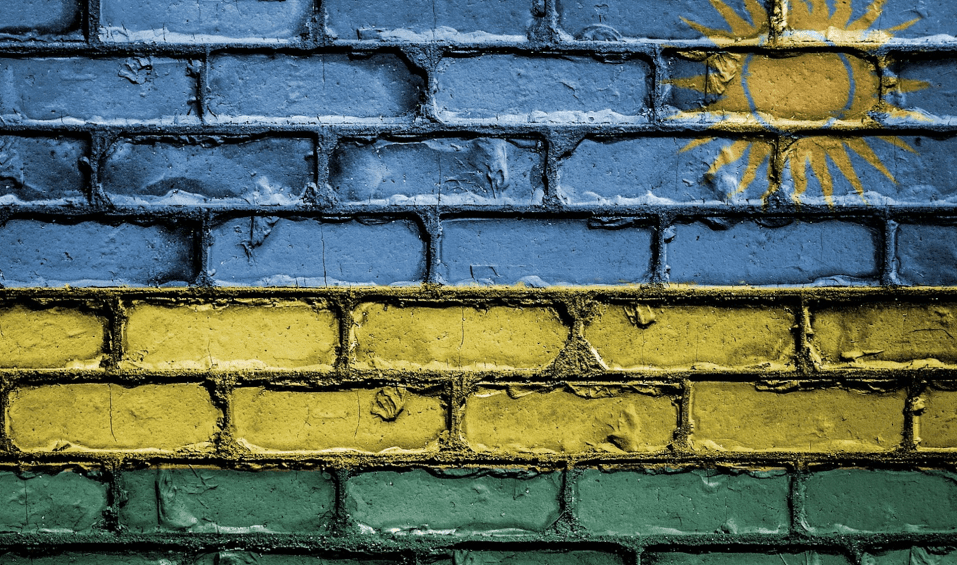
Rwanda presents a compelling case study of how national identity can be developed and transformed. Since ages, Rwandans lived together, farming the land and sharing traditions. The people identified primarily with their clans, and the terms “Hutu” and “Tutsi” were more about social roles and economic status than about fixed ethnic groups.
Then came the Germans, and later the Belgians, who colonised Rwanda. The Belgians, in particular, sought to simplify their control by creating clear distinctions between the Hutus and Tutsis, elevating the Tutsis to positions of power. They issued identity cards that labeled people as either Hutu or Tutsi, setting the stage for future conflict. These labels began to take on a life of their own, fostering resentment and division.
Fast forward to the mid-20th century, as Rwanda moved towards independence. The tension between the Hutus, who made up the majority, and the Tutsis, who had been favoured by the colonial rulers, grew. Political power shifted to the Hutus, and over the next few decades, discrimination and periodic violence against Tutsis became common. Then, in 1994, the tension exploded into one of the most horrific events of the 20th century, when nearly 800,000 Tutsis were slaughtered in a genocide. Neighbours turned against neighbours, driven by years of built-up hatred and fear, and spurred on by hateful propaganda.
But out of this darkness, Rwanda began to rebuild. After the genocide, the new government decided to change the narrative. They understood that the identities of Hutu and Tutsi had been manipulated to devastating effect. They aimed to forge a new, inclusive national identity.
One of the first steps was removing the ethnic labels from identity cards. They promoted the idea that all Rwandans were simply that: Rwandan. The government also created the National Unity and Reconciliation Commission, which worked tirelessly to mend the societal rifts. Community-based courts were set up to deal with the crimes of the genocide, allowing for justice and reconciliation to take place at a local level.
Rwanda also focused on economic development as a path to unity. Schools emphasised a common Rwandan history, and national holidays celebrated the country’s progress and resilience. Every year, the country holds commemorations for the genocide, not to dwell on the past, but to remind everyone of the importance of unity and to honour the resilience of the survivors.
The transformation wasn’t easy, and there are still challenges. But the government’s efforts have undoubtedly changed how Rwandans see themselves and their place in the world. The idea of a Rwandan identity, once fractured by colonial manipulation and violent conflict, is now being reshaped into something more inclusive and forward-looking.
Rwanda’s story is a powerful example of how national identities can change and adapt, reflecting the resilience and determination of the people who share it.
Nations and national identities are complex social constructs that are both imagined and real in their impacts. The idea of an imagined community helps us understand the psychological and cultural roots of national identity. Rwanda’s example shows that national identity is constantly evolving, shaped by history, society, and politics. As the world becomes more connected, understanding national identities is crucial for maintaining peace and unity.


Leave a comment