
A brief article on the detrimental impact of price controls on the economy
From the insights of the “The Price is Indeed Right” article, we saw that prices allocate resources and act as a signal. However, prices might sometimes fall short of being perfect. Often, governments will step up and intervene to help restore the natural functions of prices, be it through addressing inequities or promoting social welfare. But sometimes these interventions, whilst being well-intentioned, can turn solutions into problems. Among the several examples of government failures in markets, price control stands out as a cautionary tale – a policy that often results in shortages, excesses, distorted signals, and a loss of consumer and producer surplus.
Price controls, in the form of price ceilings or price floors, aim to regulate the cost of goods and services to achieve specific goals or to rectify the distorted price signals in the market.
Price ceilings are like putting a lid on prices, keeping them from rising above a certain level. When the government sets this cap below the equilibrium price, it’s like saying, “You can’t charge more than this.” Sounds good for consumers, right? Well, not exactly. With lower prices, demand shoots up because things seem more affordable. But here’s the catch: suppliers aren’t keen on selling at reduced prices because it eats into their profits. So, they might produce less or stop altogether, leading to shortages. A classic example? Rent control. The government limits how much landlords can charge for rent, but this often results in a scarcity of rental properties. (Read More-on-Rent-Control).
On the flip side, price floors set a minimum price, ensuring that prices don’t drop below a certain level. Take minimum wage laws, for instance. By setting a floor on how low wages can go, the government aims to protect workers. However, when wages are artificially raised above what the market would naturally determine, demand for labor decreases. This can lead to excess supply, where there are more workers willing to work at the mandated wage than there are jobs available. The result? Unemployment and a decrease in both consumer and producer surplus as businesses may cut back on hiring or invest in automation to offset increased labor costs. (Read Effects of minimum wages)
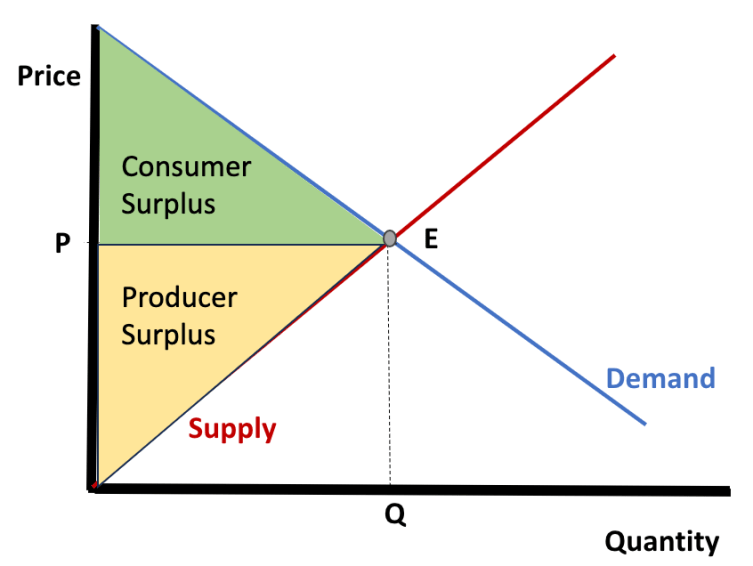
Fig 1: Demonstrates a free market scenario with the consumer and producer surplus
As compared to a free market scenario, these price control interventions and consequent price distortions eventually lead to disruptions to both consumer and producer surplus, since they introduce a “deadweight loss” to society. Deadweight loss is like a loss of potential value that neither consumers nor producers benefit from, and it ultimately reduces overall economic welfare.
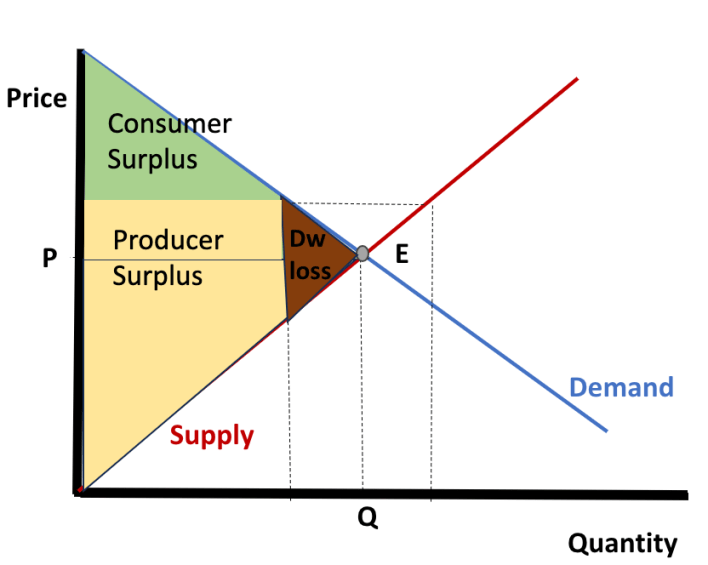
Fig 2: Demonstrates a market with a price floor, the consumer surplus is reduced and a loss of welfare to society is seen
Perhaps the most troubling of all, price controls often give rise to underground markets and illicit activities. When legal prices fail to equilibrate supply and demand, a parallel market emerges where goods are traded at equilibrium prices, often at higher rates. Underground markets flourish because of the difference between controlled prices set by the government and the actual prices in the market. These hidden markets operate illegally, away from rules and regulations. They not only weaken the impact of price controls but also encourage inefficiency and corruption.
Thus, when governments intervene in markets, like with price controls, they can unintentionally create more problems than they solve. Shortages, surpluses, and messed-up pricing signals are just some of the issues that can arise. Policymakers need to be cautious, making sure their actions actually improve things for the economy and society as a whole. It’s all about getting it right and avoiding unintended consequences.
 Crossroads Chronicles
Leave a comment